
Probiotics in Prostate Cancer Treatment
According to the GLOBOCAN cancer statistics from the International Agency for Research on Cancer (IARC) and mortality rates from the World Health Organization’s mortality database for 2020, the estimated rates of incidence and mortality by gender and age group were calculated for 38 types of cancer across 185 countries or territories worldwide. Approximately 19.3 million people are estimated to have cancer. The most commonly diagnosed cancers globally include breast cancer in women (2.26 million cases), lung cancer (2.21 million cases), and prostate cancer (1.41 million cases). Prostate cancer is the most frequently diagnosed cancer in men, followed by lung cancer and liver cancer (1-3).
Characteristics and Treatment Methods for Prostate Cancer
Prostate cancer is a prevalent cancer in men over 50 years old. The prostate gland, located near the urethra’s bladder, produces fluid discharged during ejaculation. Prostate cancer can manifest symptoms such as pain while standing up or sitting down, urinary urgency and difficulty, incomplete urination, and occasionally blood in the urine. Common treatment methods for prostate cancer include surgery (endoscopic transurethral resection of the prostate, radical prostatectomy), radiation therapy, and chemotherapy (4). However, these methods often entail side effects that impact patients’ quality of life. Hence, probiotics are being anticipated as a supportive method to alleviate the side effects of primary treatments and actively prevent prostate cancer in men.
Mechanisms and Application of Probiotics in Prostate Cancer Treatment and Support
The beneficial effects of using probiotics in preventing and treating cancer have been studied and shown promising results. They may prevent cancer initiation, enhance clinical effectiveness, and minimize the side effects of cancer therapies (Figure 1) (5). Most of these benefits are achieved through regulating the host’s immune function and inflammation response. Currently, the use of probiotics in prostate cancer treatment is extensively researched due to its positive impact on patients’ quality of life. Prostate cancer is the second leading cause of death in the United States and accounts for 20% of new diagnoses in men (2). Probiotics can stabilize gut bacteria and improve immune function, reducing the occurrence of infections and reducing rectal volume changes during X-ray treatment. Utilizing probiotics may be a cost-effective method to enhance the quality of life for prostate cancer patients.
According to the World Health Organization (WHO), probiotics or microorganisms are defined as living organisms commonly found in functional foods or everyday supplements. When used in moderate amounts, they offer many health benefits to users and combat various diseases (6). The human digestive system harbors a large number of bacteria that have profound connections with mucosal epithelial cells and immune cells. These microorganisms impact digestive activities and metabolism, exchange bile acids, and synthesize vitamins B and K. Their antigens and metabolic products can stimulate cytokine production against latent pathogens. Specifically, probiotics can assist in supporting prostate cancer treatment.
Research has identified that the gut microbiota affects both local and systemic immunity (7, 8). Studies have found that the translocation of gut microbes enhances T-cell function through TLR4 signaling. This translocation activates the innate immune system and induces tumor regression (7).
Moreover, a study has highlighted the beneficial effects of the probiotic Lactobacillus acidophilus in reducing rectal volume changes, a critical factor in determining the position of the prostate gland during radiation therapy (8-10). Not only that, but probiotic products also play a role in reducing the adverse effects of radiation therapy. Probiotics reduce NF-κB activity, helping balance the production of TNF-α, pro-inflammatory cytokines, and antioxidant enzyme production. This mechanism eliminates free radicals, the primary mechanism by which probiotics protect healthy cells from radiation effects (11, 12).
In a study by Yongkan Ki MD and colleagues, the effects of Lactobacillus acidophilus on prostate gland disease were outlined. Prostate cancer patients were identified and underwent basic treatment while consuming capsules containing 1.0 × 10⁸ units of L. acidophilus bacteria twice daily (8). Forty patients were randomly divided into two groups. The L. acidophilus group demonstrated the probiotic’s effectiveness in prostate cancer treatment. L. acidophilus is highly beneficial in supporting prostate cancer radiation therapy.
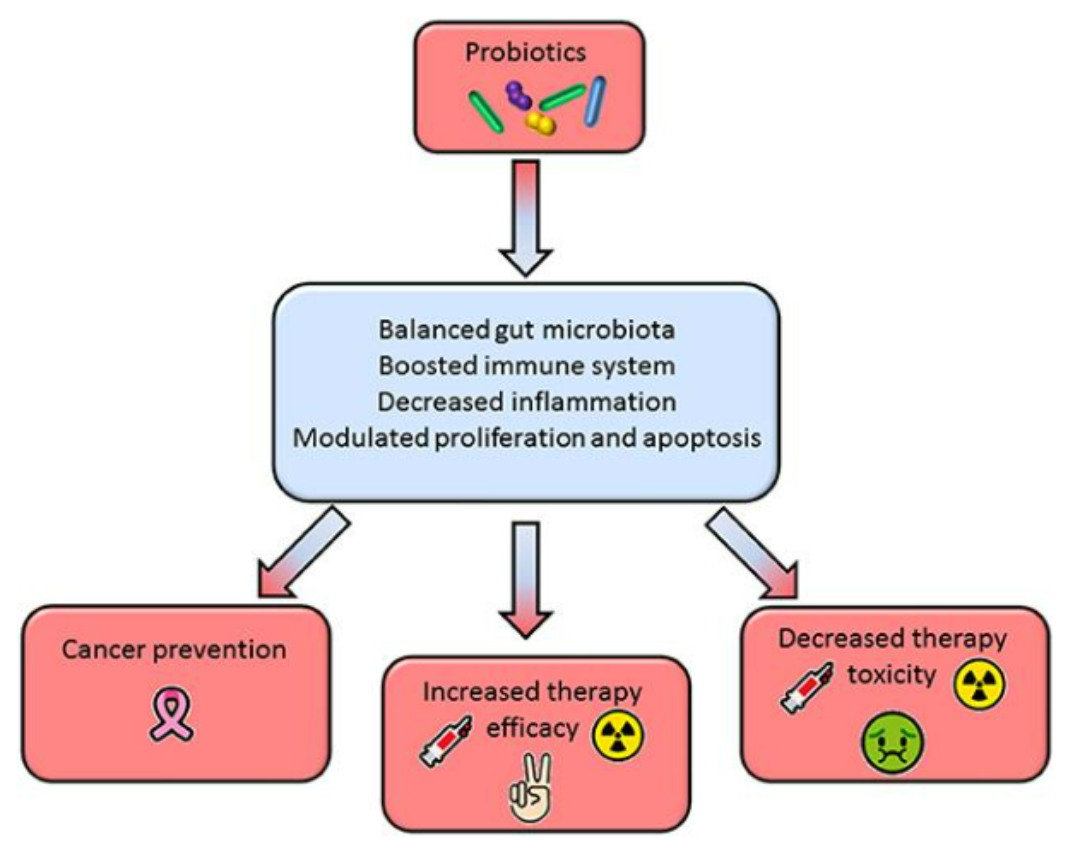
Figure 1: The effects of probiotics in cancer prevention and treatment
In summary, the use of probiotics in prostate cancer treatment shows immense potential. Studies indicate that using probiotics may help improve prostate gland inflammation and support prostate cancer treatment. Probiotics can enhance the immune system, reduce pain and inflammation, and inhibit cancer cell growth. However, further research and trials are necessary to precisely determine the probiotics’ effects on prostate cancer treatment and establish the most effective treatment approaches.
References:
- DeSantis CE, Miller KD, Dale W, Mohile SG, Cohen HJ, Leach CR, et al. Cancer statistics for adults aged 85 years and older, 2019. CA Cancer J Clin. 2019;69(6):452-67.
- Siegel RL, Miller KD, Jemal A. Cancer statistics, 2019. CA Cancer J Clin. 2019;69(1):7-34.
- Sung H, Ferlay J, Siegel RL, Laversanne M, Soerjomataram I, Jemal A, et al. Global Cancer Statistics 2020: GLOBOCAN Estimates of Incidence and Mortality Worldwide for 36 Cancers in 185 Countries. CA Cancer J Clin. 2021;71(3):209-49.
- Denmeade SR, Isaacs JT. A history of prostate cancer treatment. Nat Rev Cancer. 2002;2(5):389-96.
- Panebianco C, Tiziana Latiano, and Valerio Pazienza. Microbiota manipulation by probiotics administration as emerging tool in cancer prevention and therapy. Frontiers in Oncology. 2020;10:679.
- Kwa M, Plottel CS, Blaser MJ, Adams S. The Intestinal Microbiome and Estrogen Receptor-Positive Female Breast Cancer. J Natl Cancer Inst. 2016;108(8).
- Paulos CM, Wrzesinski C, Kaiser A, Hinrichs CS, Chieppa M, Cassard L, et al. Microbial translocation augments the function of adoptively transferred self/tumor-specific CD8+ T cells via TLR4 signaling. J Clin Invest. 2007;117(8):2197-204.
- Ki Y, Kim W, Nam J, Kim D, Lee J, Park D, et al. Probiotics for rectal volume variation during radiation therapy for prostate cancer. Int J Radiat Oncol Biol Phys. 2013;87(4):646-50.
- Frank SJ, Dong L, Kudchadker RJ, De Crevoisier R, Lee AK, Cheung R, et al. Quantification of prostate and seminal vesicle interfraction variation during IMRT. Int J Radiat Oncol Biol Phys. 2008;71(3):813-20.
- Du SX, Jia YR, Ren SQ, Gong XJ, Tang H, Wan-Shui W, et al. The protective effects of Bacillus licheniformis preparation on gastrointestinal disorders and inflammation induced by radiotherapy in pediatric patients with central nervous system tumor. Adv Med Sci. 2018;63(1):134-9.
- Dai C, Zheng CQ, Meng FJ, Zhou Z, Sang LX, Jiang M. VSL#3 probiotics exerts the anti-inflammatory activity via PI3k/Akt and NF-kappaB pathway in rat model of DSS-induced colitis. Mol Cell Biochem. 2013;374(1-2):1-11.
- Sharma A, Rath GK, Chaudhary SP, Thakar A, Mohanti BK, Bahadur S. Lactobacillus brevis CD2 lozenges reduce radiation- and chemotherapy-induced mucositis in patients with head and neck cancer: a randomized double-blind placebo-controlled study. Eur J Cancer. 2012;48(6):875-81.